Every mag meter spec sheet used to carry the same fine print: 5 diameters of straight pipe upstream, 2 to 3 downstream, no exceptions. On a real site, next to a manifold, an elbow, or a pump outlet, that straight run often simply isn't there. Zero:zero (0:0) mag meters were built to solve exactly that problem, and the three major brands we supply have each arrived at a genuinely different way of doing it.
The straight-run rule exists because a standard electromagnetic flow meter needs a settled, axially symmetric flow profile passing through its electrodes to measure accurately. An elbow, tee, valve, or pump immediately upstream introduces swirl and turbulence, and a meter reading that disturbed flow will drift outside its accuracy spec. The traditional fix was simple: give the water enough straight pipe to settle down before it reaches the meter. The problem is that a lot of real installation sites, particularly retrofits, don't have that pipe run to give.
A zero:zero rating means a meter can be installed with no required straight run on either side, directly behind a bend, valve, or reducer, without a documented accuracy penalty. It's a genuinely useful capability for site-constrained municipal and industrial installs across Canterbury. But "zero:zero" isn't one piece of technology licensed across the industry, it's a design goal that Krohne, Endress+Hauser, and ABB have each solved with different engineering.
Krohne: reshaping the tube itself
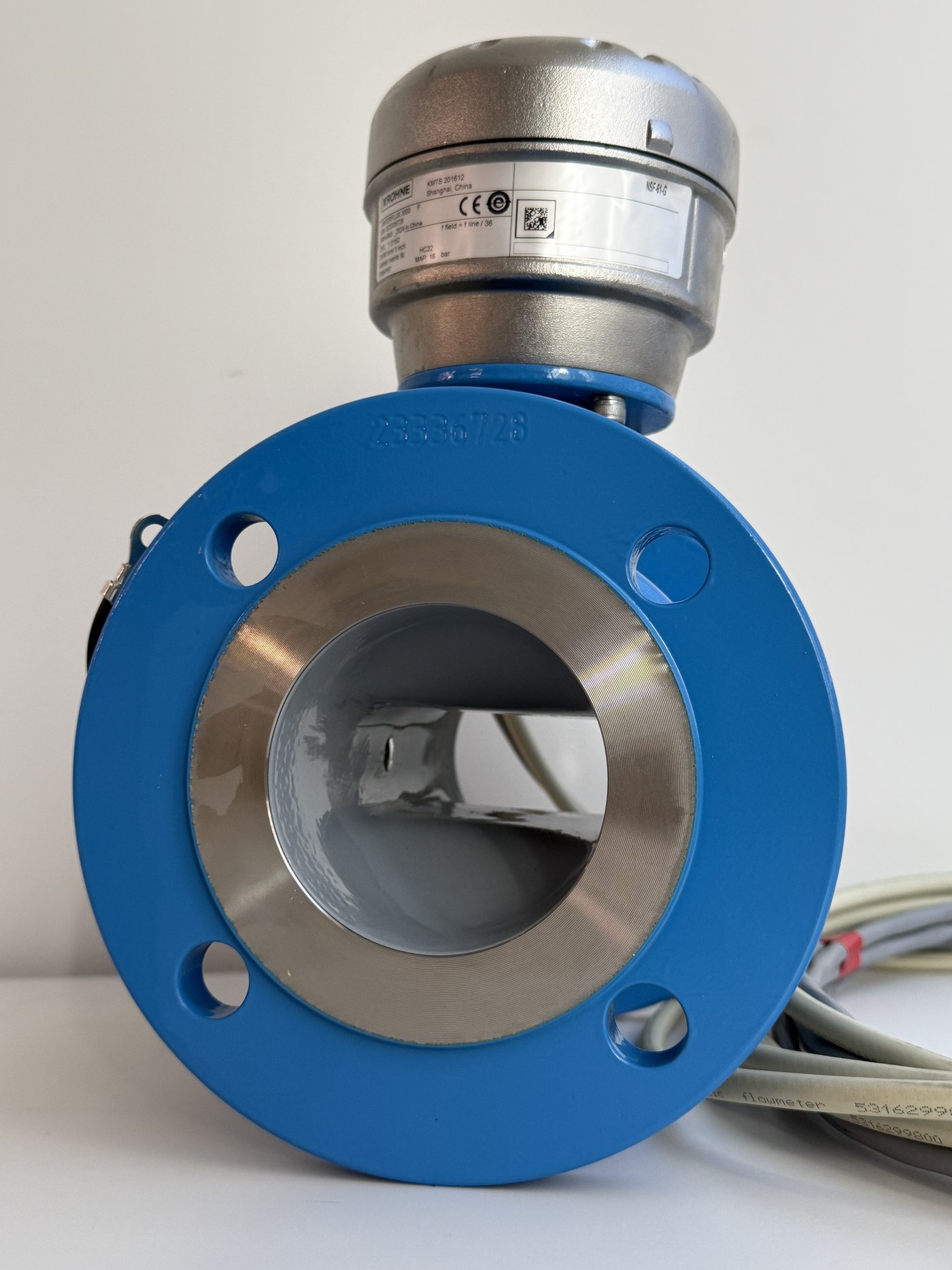
Krohne's WATERFLUX range uses a rectangular, reduced cross-section measuring tube rather than the round full-bore tube found on a standard mag meter. That shape change does the work mechanically: it conditions the flow profile as water passes through, so the meter doesn't need a long straight run beforehand to get a settled reading. WATERFLUX meters are rated for installation directly behind elbows, valves, or reducers, and their sealed, no-moving-parts construction also makes them suitable for direct burial or flooded chamber installations, relevant for meter pits and underground point-of-take setups common on Canterbury properties.
Endress+Hauser: more electrodes, smarter processing
Endress+Hauser's approach with the Promag W range (available with the "0 x DN full bore" option) keeps the standard round, full-bore tube, so there's no pressure loss or flow restriction, and instead solves the problem with the electronics. Multiple measuring electrodes generate a far denser set of flow data than the standard two-electrode design, and Endress+Hauser's signal processing uses that data to filter out swirl computationally. The result is a meter that holds its rated accuracy directly downstream of bends, tees, or other obstructions, without narrowing the pipe to force the flow to settle.
ABB: reduced bore, refined over time
ABB's zero:zero offering isn't new. The WaterMaster FER, with its reduced bore sensor design, has been ABB's 0xD/0xD meter for years, giving accurate readings with no required straight run upstream or downstream. In June 2026, ABB extended that same reduced bore approach to its ProcessMaster FER620, adding a fully welded, hermetically sealed sensor construction rated IP68 for direct burial without a protective chamber. ABB has positioned the update specifically for pumping stations, water abstraction, and treatment facilities, sites where straight-run space is hardest to find.
For our customers, the practical upshot is choice. A site with an existing manifold right at the point of take, a pump station with no room to re-pipe, or a district metering point squeezed between two fittings no longer has to force a straight-run compromise or pay for costly pipe rerouting to get a compliant, accurate meter installed. Because we're not tied to a single brand, we can match the zero:zero solution to the actual constraints of your site rather than defaulting to whichever manufacturer we happen to stock.
Verification requirements don't change with a zero:zero install. Whichever brand ends up on site, the meter still goes on the standard 5-year verification cycle, and Blue Tick installation, verification, and data hosting work the same way it always has. What does change is the verification method: ECan's standard clamp-on ultrasonic verification needs a run of straight, accessible pipe to clamp the Flexim Fluxus F601 onto, which a zero:zero installation by definition doesn't have. Where a zero:zero mag meter is installed, we carry out an electronic verification instead, using brand-specific test equipment to check the meter against its original factory calibration. As with any compliance verification, this can only be used as an alternative to a clamp-on/flow-through verification where prior agreement is in place with the relevant regional council.
If you're planning a new install or a replacement on a site where a straight run is hard to come by, tell us about your constraints and we'll recommend the meter that actually fits, not just the one that's easiest to spec.