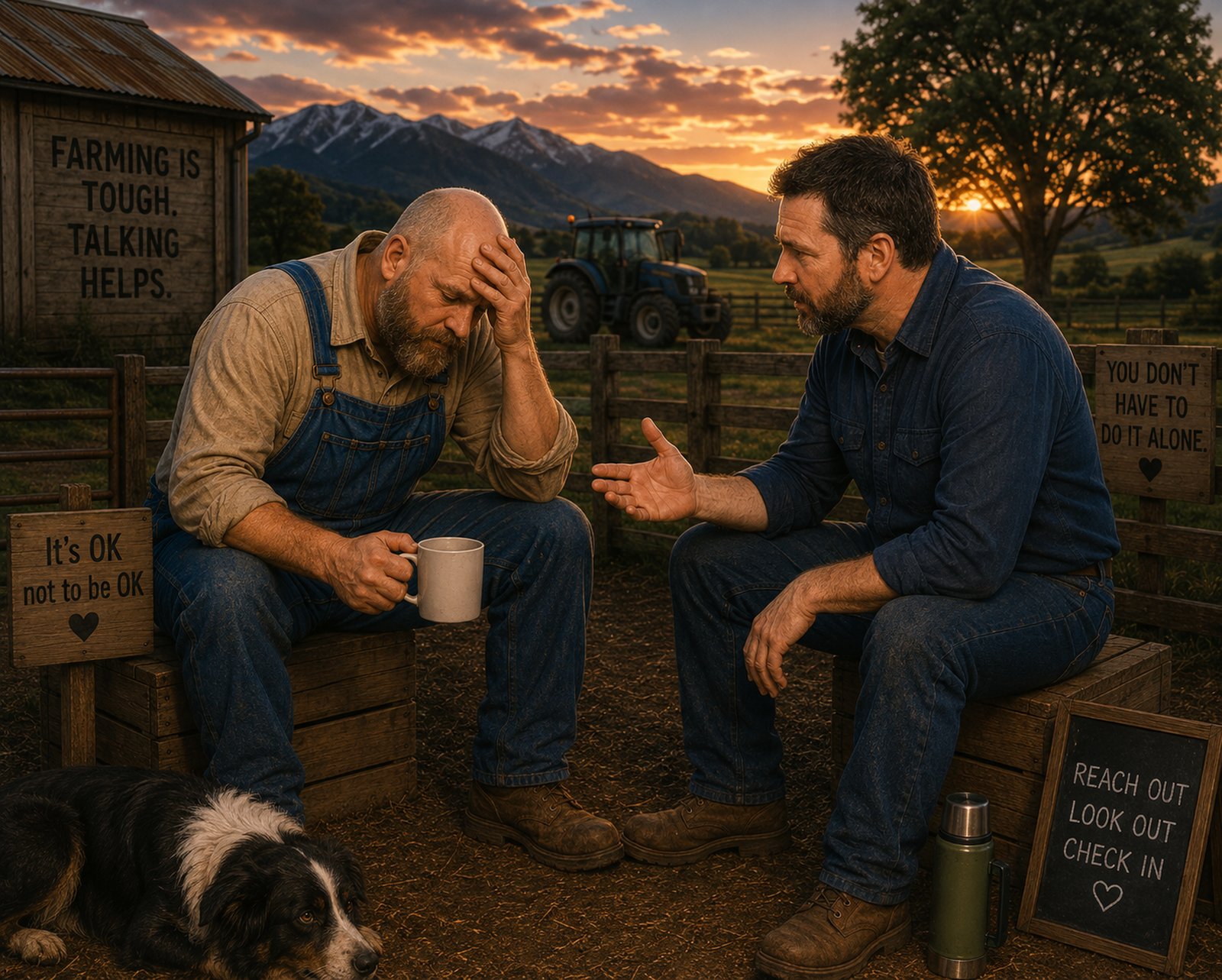
There are few professions that demand as much from a person as farming. It's not just a job, it's a lifestyle. It doesn't stop at 5pm, it doesn't take weekends off, and it certainly doesn't wait for you to feel ready.
The animals still need feeding. The pumps still need fixing. The weather still does whatever it wants. From the outside, farming can look peaceful: rolling green paddocks, fresh air, wide open spaces. But those who live it know the reality is often very different. Behind many farm gates are people carrying an enormous mental load.
Why are farmers more susceptible to mental health challenges?
New Zealand farmers face a unique combination of pressures that many other industries simply don't experience, and they tend to stack on top of each other rather than arrive one at a time.
Financial pressure is a constant companion. Milk prices fluctuate, meat prices move, fertiliser costs rise, fuel gets more expensive, and interest rates change. One poor season can wipe out months or even years of hard work, and many farmers carry significant debt that doesn't disappear when the working day ends.
Weather doesn't negotiate. Too much rain, not enough rain, floods, droughts, snow, wind: every season brings its own uncertainty, and despite all the planning in the world, much of a farmer's success is determined by factors completely outside their control.
Isolation plays its part too. Many farms are hours from major centres, and it's entirely possible to spend days seeing only immediate family, or no one at all. Solitude can be enjoyable, but prolonged isolation can quietly affect mental wellbeing without people even realising it's happening.
Long hours compound everything else. Calving, lambing, harvest, irrigation issues, and equipment breakdowns mean twelve to sixteen hour days become normal during busy periods. Sleep becomes limited, fatigue builds, and when we're exhausted, everything feels harder to manage.
Then there's the weight of responsibility. Farmers aren't just responsible for themselves. They're responsible for livestock, employees, family members, crops, machinery, compliance, environmental obligations, finances, and often a business that has been in the family for generations. That's a lot for anyone to carry.
Perhaps the biggest challenge is cultural, and it's the pressure to just get on with it. Many farmers pride themselves on being resilient. They solve problems, they push through, they work harder. Those qualities make great farmers, but they can also make it incredibly difficult to admit when things aren't okay.
What are the warning signs?
Mental health struggles don't always look dramatic. Often the changes are gradual, and easy to explain away as just a busy season. Here's what's worth paying attention to.
- Feeling constantly overwhelmed
- Losing motivation for jobs you normally enjoy
- Trouble sleeping, or sleeping far more than usual
- Increased irritability or anger
- Feeling anxious most days
- Difficulty concentrating or making decisions
- Drinking more alcohol than usual
- Feeling hopeless or trapped
- Withdrawing from friends, neighbours, or community events
- They stop answering calls or messages
- The farm appears less cared for than usual
- They're unusually quiet, or unusually short tempered
- They stop attending sale days, sports clubs, or local events
- They mention feeling like a burden
- They seem exhausted all the time
- They no longer take pride in things they once cared about
Sometimes the biggest clue is simply that someone doesn't seem like themselves anymore.
The biggest roadblock
For many farmers, the biggest roadblock isn't a lack of services. It's asking for help. There's a persistent belief that seeking help means admitting defeat. Some worry they'll be judged. Others don't want to burden their family. Many assume someone else has it worse, and some simply don't know where to start.
The reality is that mental health struggles can affect anyone. Strong people experience depression. Hard-working people experience anxiety. Successful farmers experience burnout. Asking for help isn't weakness, it's good management. We regularly service machinery before it breaks down, and we maintain pumps before they fail. We shouldn't wait until we're at breaking point before looking after ourselves either.
Looking after yourself, and each other
Mental wellbeing isn't built through one big action. It's often the small things done consistently: catching up with a neighbour for a coffee, joining the local rugby or bowls club, talking honestly with your partner, taking a genuine day off when you can, getting enough sleep, exercising outside of work, seeing your GP when something doesn't feel right, or checking in on the mate who's gone quiet.
"How are you really doing?" Sometimes that's the most important question you can ask, and then taking the time to actually listen to the answer.
Help is available
If you or someone you know is struggling, there are organisations across New Zealand that understand the realities of rural life. You don't need to have all the answers before reaching out. Some good places to start:
Free, confidential, practical, and emotional support tailored for farming families and rural communities facing hardship or adverse weather events. rural-support.org.nz
A nationwide wellbeing programme designed by and for the rural community, to help farmers navigate day-to-day pressures. farmstrong.co.nz
New Zealand's official, free mental health helpline. Completely free to call or text, any time, 24/7, to connect with a trained, professional counsellor.
Free health advice from a registered nurse, available 24 hours a day, 7 days a week.
Often the best first step, for both the practical and the personal side of things.
Sometimes the first conversation is the hardest, but also the most important.
If you or someone you know is in immediate danger, call 111.
We're all in this together
Farming has always been about community. Neighbours help neighbours. Families pull together. Communities rally when times get tough. Mental health should be no different. If you're struggling, please don't carry it alone. If someone around you doesn't seem themselves, don't assume someone else will check in. One conversation could make an enormous difference.
Don't suffer alone. You are not alone. We're all in this together.
If this article resonates with you, take a moment today to check in with someone. Send a text, make a phone call, or drop around for a cuppa. You never know how much that small act of kindness might mean, because looking after New Zealand farming starts with looking after the people behind it.